News
Catching Empty Backups: Automatic Misconfiguration Warnings and Filter Auditing
A green checkmark doesn't guarantee your data is safe; typos and overly broad exclude rules can cause backup jobs to complete cleanly while saving zero files. Discover how Duplicati's built-in checks, filter auditing, and console alerts catch silent failures before an empty backup ruins your recovery.
A green checkmark in your backup dashboard should signal peace of mind, but a misconfigured exclusion rule or a typo in a wildcard filter can turn a successful run into an empty shell that backs up zero bytes. Discovering during a recovery event that a job completed cleanly while saving nothing is every administrator's worst nightmare.
Detecting Zero-File Operations
Duplicati includes built-in post-backup inspection routines designed to catch empty backup runs before they become catastrophic data loss events. By monitoring the initial file scanning phase, Duplicati evaluates whether the backup job actually examined and processed your source data.
File Count Verification: If a scheduled job parses zero files or folders, the system triggers a warning status rather than a clean success code.
Log Telemetry: Post-run summaries expose total files scanned, total size evaluated, and modified byte counts, making sudden drop-offs in dataset size immediately obvious.
Catching Regex and Dynamic Filter Errors
Complex backup routines often rely on regular expressions (regex) or dynamic filter files to exclude caches, temporary logs, or system files. A single misplaced asterisk, unescaped character, or broken pattern can inadvertently exclude your entire target directory.
Syntax Auditing: Misformatted regular expressions can accidentally resolve to a catch-all rule (e.g., matching everything). Duplicati audits filter rules during the initial job initialization to catch malformed regex syntax before the backup runs.
Dynamic Filter Validation: When importing exclusion lists from external text files, system checks verify logic line-by-line, throwing warnings if an external edit accidentally corrupts the filter set.
Setting Up Automated Alert Notifications
Rather than manually auditing logs, you can configure proactive alerts to flag empty or suspicious backup runs the moment they finish.
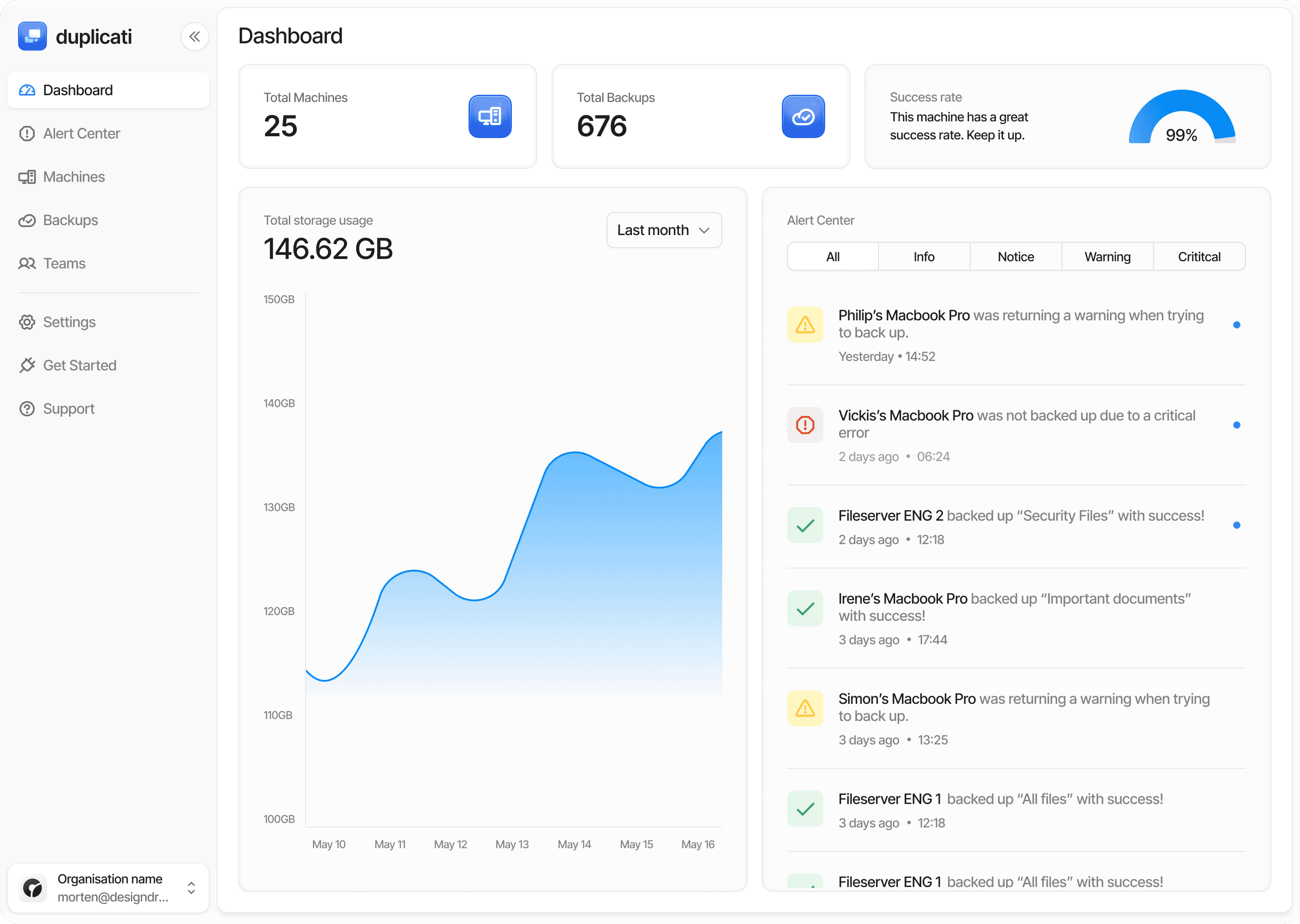
The Duplicati Console: The Duplicati console serves as your command center for constant monitoring. If a job finishes but processes zero files, the console detects a large number of file changes. You can dive directly into the job's result logs right from the console to quickly identify if an overly aggressive filter was the culprit.
Integration Points: For off-site alerting, you can direct output messages to email, Slack, or webhooks using advanced options like
--send-mail-toor HTTP post-run scripts whenever a job generates a warning state or filter error.
Building admin confidence requires verifying not just that your backup job ran, but that it actually found data to protect. Auditing your filters today is good insurance that your restore process works when you need it most.