Article
Mar 26, 2026
Why Enterprise Search Is a Dead End for AI
Most teams that buy enterprise search tools like Glean are not actually trying to “search.” They are trying to answer questions about how their company works, why certain decisions were made, and what is likely to happen next. Search feels like progress because it surfaces information faster, but it quietly locks companies into a shallow interaction with their own data. It retrieves documents. It does not understand systems. If you look closely at how modern teams operate, the gap becomes obvious...
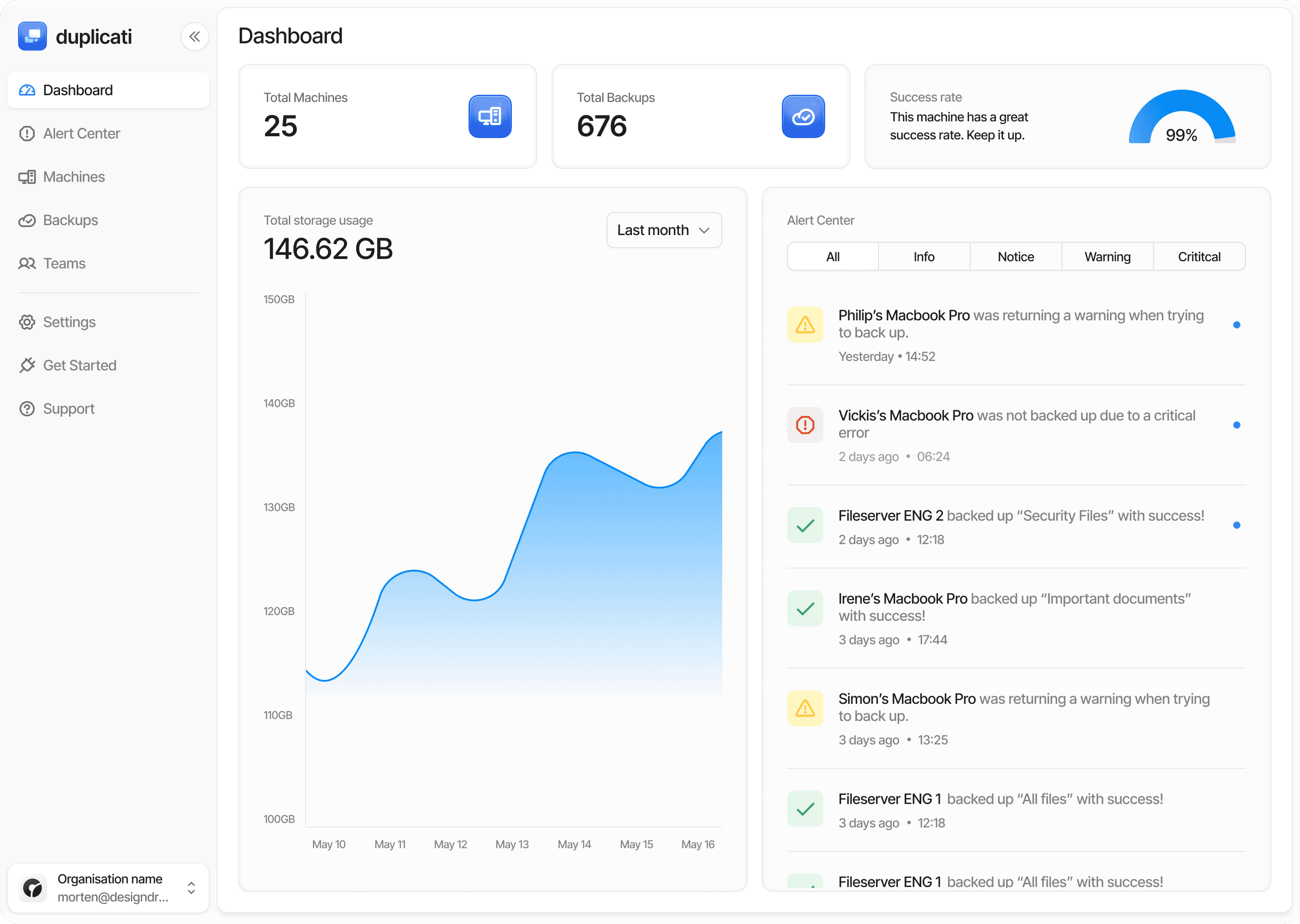
A typical SaaS company today runs on a messy but familiar stack. Product data lives in Postgres and gets piped into Snowflake or Databricks. Event tracking flows through Segment into tools like Mixpanel or Amplitude. Customer conversations are scattered across Zendesk, Slack, and email. Engineering decisions are buried in GitHub issues, pull requests, and internal docs. Over time, all of this ends up in backups—often sitting in S3, Backblaze, or another storage layer managed by tools like Duplicati.
When a team adopts Glean, what they get is a clean interface over this chaos. You can type a question like “Why did churn spike in Q2?” and it will return a handful of relevant documents, Slack threads, maybe a dashboard link. It feels powerful at first because it saves time hunting for context. But nothing about the underlying system has changed. The data is still fragmented, still static, still disconnected from how decisions are made.
Search gives you fragments of the past. It does not give you a way to use the past.
This becomes a real constraint the moment a company tries to do anything more ambitious with AI.
Take a concrete example. Imagine a product team trying to understand why a feature failed. Today, they might open Mixpanel to look at user behavior, check Zendesk for support tickets, skim Slack for internal discussions, and maybe review a few PRs on GitHub. With Glean, they can shortcut some of that by retrieving the right documents faster. But they are still manually stitching together a narrative from static pieces.
Now imagine trying to train a model on that same problem. Not just to answer “what happened,” but to simulate decisions, predict outcomes, or recommend what to build next. Retrieval is no longer enough. You need structured data, versioned over time, tied to outcomes, and reproducible in a way that lets you replay what actually happened.
That is where search breaks.
Search systems are fundamentally designed around retrieval. They index documents, rank relevance, and return results. They are not built to reconstruct environments, track how data evolved, or feed continuous training pipelines. Even when you layer AI on top, you are still operating on snapshots of information rather than a living system of record.
Duplicati takes a very different approach because it starts from a different assumption: the most valuable dataset a company owns is not what is currently in its dashboards or documents, but the full history of how it has operated over time. That history already exists. It is sitting in backups.
Backups capture everything—product logs, database states, support conversations, internal discussions, experiment results. Not as curated summaries, but as raw, time-indexed reality. Historically, that data has been treated as a compliance requirement or a disaster recovery tool. It is stored, encrypted, and rarely touched unless something breaks.
The shift is to treat that layer as infrastructure for AI.
Instead of pulling documents into a search index, Duplicati continuously extracts and structures backup data into formats that models can actually use. Application logs become event streams that can be replayed. Support tickets become labeled datasets tied to product changes. Database snapshots become time-series records that show how user behavior evolved. Everything is versioned, permissioned, and traceable back to its source.
Once that exists, the workflow changes completely.
Going back to the churn example, you are no longer retrieving a few documents and guessing. You can reconstruct the exact state of the product at any point in time, align it with user behavior, and simulate alternative decisions. You can train a model not just on what users did, but on how the company responded and what the outcome was. Over time, this becomes a system that learns from the company’s own history, not from generic external datasets.
This is the core difference:
Search helps you find information.
Training infrastructure lets you learn from it.
The implications are larger than they seem. Companies today spend heavily on external tools to approximate this capability. They buy product analytics platforms to understand behavior, BI tools to analyze trends, and increasingly, external datasets to train models. At the same time, they are already storing years of their own high-quality, proprietary data in backups—data that directly reflects how their business actually works.
That creates a strange dynamic where teams pay once to store their history and again to replace it with something less relevant.
By turning backups into a continuous training layer, Duplicati collapses that stack. Product logs, support data, and operational history flow directly into ML pipelines. Instead of exporting CSVs or building brittle ETL jobs, teams can plug into structured datasets that are already versioned and compliant. Tools like MLflow or Weights & Biases can sit on top, but the underlying data source is no longer an afterthought—it is the foundation.
This is why enterprise search is ultimately a dead end for AI. It optimizes for a world where humans are the primary consumers of information, browsing and interpreting results. But as soon as AI becomes the primary consumer, the requirements change. Models do not need ranked documents. They need structured, consistent, and replayable data.
Search is a layer on top of knowledge.
Training infrastructure is the knowledge.
The companies that recognize this shift will stop thinking of backups as cold storage and start treating them as a second system of record—one that captures not just what exists today, but how everything came to be. That is the dataset AI actually needs.
And once you see it that way, replacing search tools like Glean is not about building a better interface. It is about replacing retrieval entirely with something deeper: a system that can learn from every decision your company has ever made, and use that to shape the next one.